How Many Dudes Tiers Explained
Every How Many Dudes run happens inside a Tier, and the difference between Tiers is the single biggest difficulty lever in the game. Tier 1 walks you from wave 1 to the G.O.A.T. boss at round 105; Tiers 2 and 3 add new constraints, new enemy types, and new endgame bosses that test a completely different side of your team. The official developer guide's TLDR: "Try a run or two in higher Tiers for some quick rewards!" Here's everything that changes when you move up — and when you actually should.
What Are the Tiers in How Many Dudes?
There are three Tiers of Challenge. The official guide describes them as increasing constraints, new unique enemies, and new epic boss battles — the same core loop, but each Tier asks you to solve different problems. Tier 1 is where you learn the game; Tier 2 and Tier 3 are where the collection game and the true endgame begin.
To fill out your full collection of Dudes, Relics, and Trinkets, the official guide says you'll need to move up to Tier 2 and Tier 3 at some point — some rewards are locked behind the higher Tiers.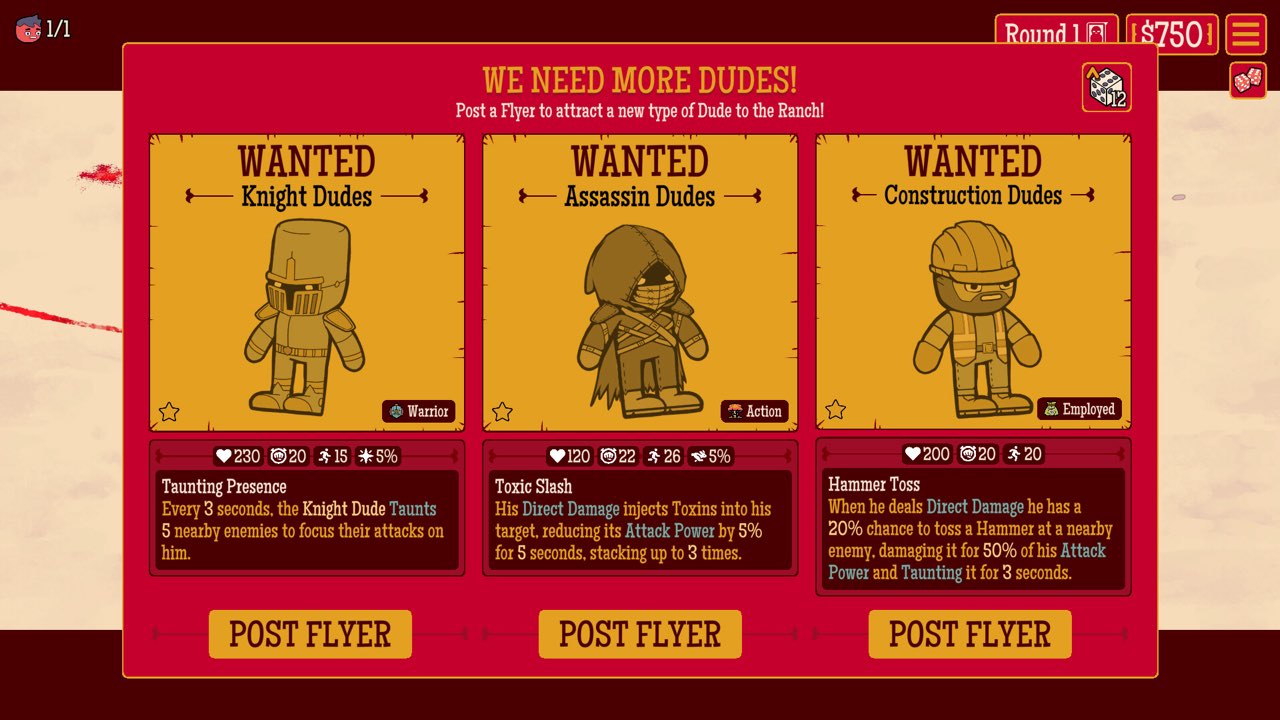 Tier 1 early game at Round 18 — the Wanted board is recruiting Knight Dudes.
Tier 1 — From Wave 1 to the G.O.A.T.
Tier 1 is the campaign proper: escalating enemy waves from toddlers to wolves, gorillas, and gods, with the run-defining G.O.A.T. boss appearing at round 105. Most of the strategy you'll find on this site — the Viking-Necro-Spartan opener, the Early Game economy build, and the Wave 100+ boss prep — is built around surviving this first climb.
Defeat the G.O.A.T. and your Dudes earn Gold Stars, which open the door to Tier 2 and Tier 3. If you want the full wave-by-wave breakdown, see our Wave Walkthrough (1–105).
Tier 2 & Tier 3 — New Constraints, New Bosses
The official guide is blunt about what awaits: "When you reach Tier 2 and Tier 3, the new endgame bosses introduced in those Tiers will test other aspects of your team, and there's a good chance that your first attempt or two will end in defeat." The method it recommends is simple: watch what each boss does, how it moves, and what its abilities are, then adapt your next run to counter it specifically.
That's why a build that carries you through Tier 1 can hit a wall later — the Best Builds page notes that every comp needs to stay flexible as Tiers add new constraints. Survivability tools like Toughness, Max HP, Temporary Health, and Cheat Death become far more valuable when you're chasing Tier 2 and Tier 3 endgame bosses.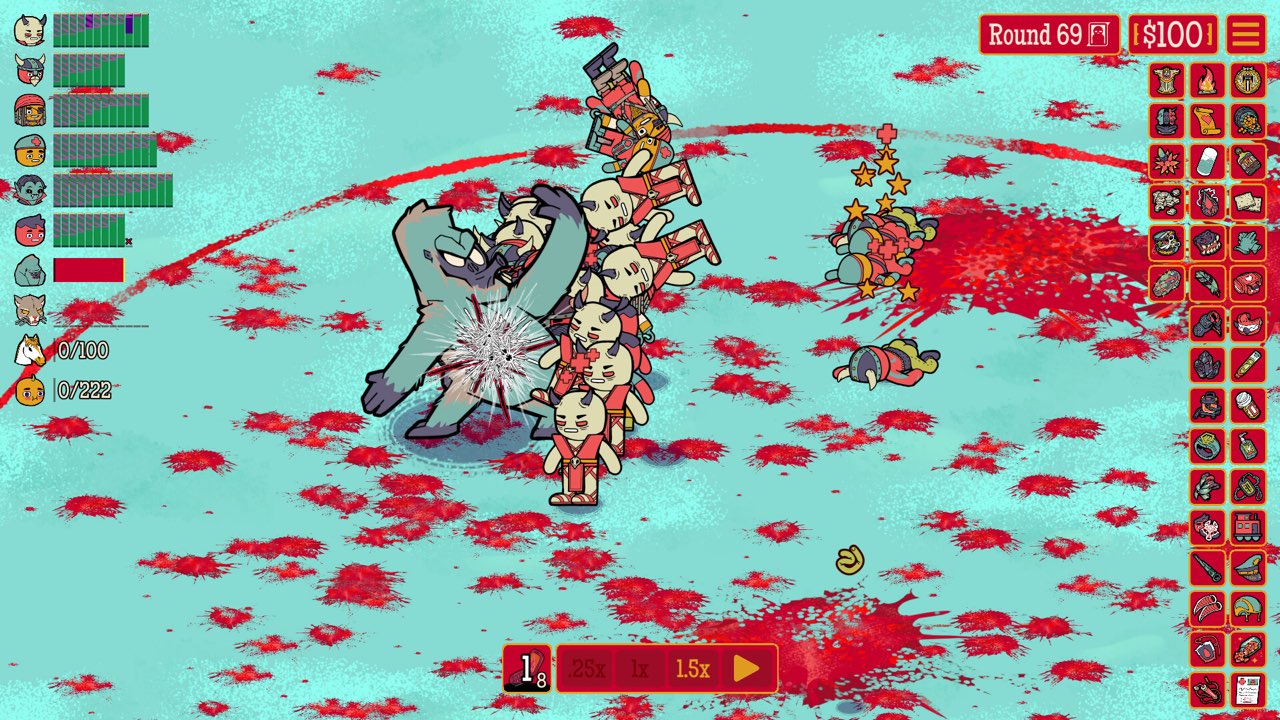 Mid-run battle at Round 69 — enemy waves keep escalating as you push deeper into a run.
Gold Stars & How Tiers Unlock
Stars are the progression currency between Tiers: Gold and Silver Stars earned from higher Tiers retroactively backfill lower Tiers, so a failed Tier 2 run still progresses your Tier 1 collection. In other words, there's almost no downside to trying a higher Tier before you feel ready — even a loss pays out.
The official guide frames the endgame as a synergy playground: learning how to create truly weird synergies is what will ultimately carry you through those Tier 3 Gold Stars.
When Should You Move Up?
Players often wait until they've fully maxed out their collection in the current Tier before moving to the next one. The official guide says this isn't necessarily a bad approach — but it points out real upsides to dipping into a higher Tier early: quick rewards, retroactive Star backfill, and early exposure to the boss patterns you'll eventually need to learn anyway.
Our advice: take your first Tier 2 run as soon as you're comfortable clearing round 105 — even if you lose, the Star backfill makes it worth the ticket.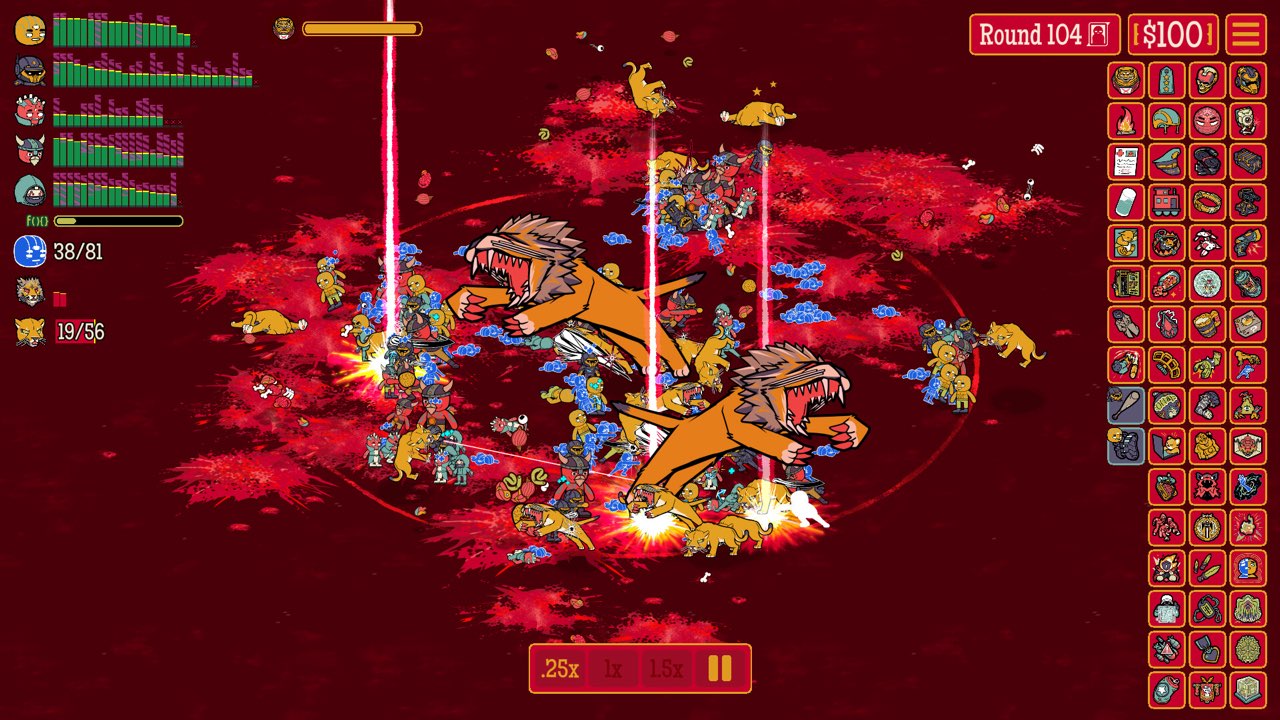 Round 104 — one round before the Tier 1 endgame boss, the G.O.A.T., appears at 105.
The Tier 2 Beta Experiment (Rolled Back)
In the first week after launch, the developers ran a beta-track experiment that made Tier 2 available from the start of a new run. Player feedback was mixed-to-negative, and on August 5 they announced the change would not ship: "Based on mixed-to-negative player feedback about this experiment we've decided to not make this change at this time."
It's a useful signal for how the Tier structure is treated as a work in progress. The developers have also confirmed a free 1.1 update — quality-of-life improvements and new Dudes — is in the works, so expect the endgame to keep evolving.
Frequently Asked Questions
What's the difference between Tiers in How Many Dudes?
Three Tiers of Challenge with increasing constraints, new unique enemies, and new epic boss battles (official guide). Tier 1 ends with the G.O.A.T. at round 105; Tiers 2 and 3 add their own endgame bosses that test other aspects of your team.
How do Tier 2 and Tier 3 unlock?
Defeat the Tier 1 endgame boss, the G.O.A.T., at round 105 to earn Gold Stars for your Dudes — that opens Tier 2 and Tier 3. Gold and Silver Stars from higher Tiers retroactively backfill lower Tiers, so a failed higher-Tier run still progresses your collection.
Can I just keep farming Tier 1 forever?
Yes — the official guide says maxing out your current Tier's collection before moving up is a perfectly fine approach. But you'll need Tier 2 and Tier 3 to fill out your full collection, and higher Tiers offer quick extra rewards along the way.
Do my builds change between Tiers?
The core comps — like the Viking-Necro-Spartan build — work in every Tier, but higher Tiers add constraints and new endgame bosses, so you'll want survivability tools (Toughness, Max HP, Temporary Health, Cheat Death) and boss-specific adaption. See our Best Builds page for the full comps.
Sources: Official How Many Dudes Guide (blog.bscotch.net) · Official Dudex · Steam Store Page & official announcements